Showing posts with label reviews. Show all posts
22.9.11
Housing Estates, London, and Dystopia
Just went to see the Broadwater Farm exhibition, portraying the story of a massive council estate complex in Tottenham made infamous after it's 1985 riots.
Held at Bruce Castle Museum, an interesting site in itself, a strange piece of history nestled in one of the more socioeconomically challenged areas of London. The power of the exhibit was in it's honour of the local people who made Broadwater a success. But underlying it all was the sense that the brutality of the civic system not only crushed a momentum of people's movement but left it dead on the curb.
Broadwater was one of those massive efforts at post-war social engineering, meant to deal with poverty and rising immigration. The huge complex was built and then basically left to decay and within a decade had fallen to such a state of disrepair that it clearly reflects a planned state of structural violence against a community by a council. The failure of these large-scale housing estates was studied by the Land Use Research Unit at King's College in the late seventies. The research of this group influenced Coleman's book Utopia on Trial: vision and reality in planned housing, which featured Broadwater Farm as an example (she was head of the research unit at the time).
The Centre for Spatially Integrated Social Science has a great article on this: Design Disadvantagement.
I also recommend the film Utopia London, which outlines the Labour vision of modern social housing and how in many ways it failed at the hands of politicians and urban planners with no foresight into community and culture.
Finally if you're in London a cycle up to Tottenham to see the exhibit takes you past the smashed windows and boarded shops that mark the result of the recent riots caused by anger over police brutality. Guardian: 'Tottenham in flames as riot follows protest'. 26 years on and history repeats itself, as we move faster towards a social dystopia fuelled by mind-numbing solutions by those in power: BBC: 'David Cameron back councils planning to evict rioters'. Russ Swan has some amazing photos he shot there in 1985 and an good article on his blog entry: Cat and mouse on Broadwater Farm, 1985
To not end on that note I channel the thoughts of Jane Jacobs and her research into the existence and importance of community at the street level and the failure of urban planning to respond to that community in her seminal book The Death and Life of Great American Cities, something that seems to have not been accounted for in the early planning of Broadwater and most other estates across the country. History doomed to repeat itself....
Press Release:
In 1985 Broadwater Farm experienced one of the worst nights of civil unrest anywhere on mainland Britain. It shocked the nation and nearly destroyed a community. Just months before, Diana Princess of Wales visited to congratulate the Broadwater Farm Youth Association on its success. Today Broadwater Farm is seen as a model of social housing, attracting visitors from around the world. This exhibition will explore the heroic achievements of a community who from the very beginning fought against all the odds. October 2010 at Broadwater Farm Community Centre. Now on at Bruce Castle Museum June 2011 to March 2012
18.7.11
11 Rooms Group Show - Manchester Art Gallery
Just came back from Manchester International Festival, a really fantastic civic take on arts and culture integrated into an urban environment. Went to see Robert Wilson's Life and Death of Marina Abramovich, but seeing as it was one of the biggest cultural disappointments of my life I'll focus on 11 Rooms, a group show of live art / performance at Manchester Art Gallery.
I'm going to focus a descriptive analyses of some of the works that I felt were socially-engaged in one way or another.
Santiago Sierra - presented Veterans of the war of Northern Ireland, where a man stands in the corner facing a wall. Both times I went in the room it was a soldier in full army gear in a frozen attention facing the corner. I walked quite close and could sense his awareness but discipline to remain still. His uniform was crisp new and clean looking. I found it a powerful allegory that was both political and simple. Apparently there were many veterans who stood for a brief period of time and all were in civilian clothes but I didn't see this. I'm not sure how powerful the statement would have been for me with some guy dressed in black. A performer I knew in one of the other pieces informed me that the particular soldier I saw was not enlisted for the artwork but saw the exhibition and requested to participate, which further expands the work's impact in the social sphere.
Tino Seghal - presented Anne Lee 2011, where a young girl maybe around ten enters the room and engages the audience in a painfully scripted monologue about commodity, time, systemisation and self (there were a series of them playing the part). She awkwardly poses questions, waiting for an answer only to continue with segments of script. The effect on the surrounding audience was to stupify their gaze with a slightly condescending smile reserved for precocious children. It's very much about you somehow, as she asks: 'would you prefer to be too busy or not busy enough?' A good question for a room full of culture vultures who probably possess middle class values of work and commodity, Seghal prods the audience he knows will be there. But somehow you can't judge the littel girl by the same set of standards so her eloquent words seem to resonate stronger.
Some of the other works also relied on acting skills, something that charges the performance with a whole other set of values and forms of communication and reception that resonate on a totally different level for me. An example is Roman Ondák' Swap, where a jovial man at a table requests or rather tries to convince oglers to swap whatever object he has for another. Reminded me of the man who traded a paperclip until it became a house. Its a game I also play with my students, but somehow in the art gallery seemed trite.
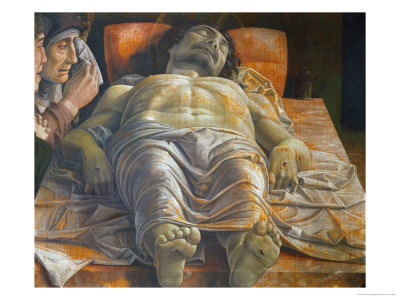
I'll mention two more I enjoyed though I wouldn't categorise as Applied Live Art, still resonated: Laura Lima's Men=Flesh/Women=Flesh where the ceiling of the gallery is lowered to about 1/2 a metre off the ground and as you peer in on your stomach you can see a hanging lamp laying on the floor and a person with a disability laying inside. I disliked the voyeur aspect of it, and found it slightly didactic but was still a beautiful image. Finally the whole show would have been upped incredibly had John Baldessari gotten his way and put a dead corpse on display in the same position as Andrea Mantegna's Foreshortened Christ, instead we got the archive presented in A4 email format.
15.2.11
'...interstitial, unoccupied spaces at the edges of the interstate...'

The Edge of Light: Wendover is a poetic study of landscape, environment, development and isolation in what the artists Brian Rosa and Adam Ryder describe as 'the border of nowhere and nowhere' in the US.
What is striking about these photos is the stillness and isolation in the images, confusing the viewer as to wether the subject is that which is being lit or the light itself. Though the exploration sought out the edge of light, its the degrees of dark that become most heightened. Light at dawn or is it dusk? Artificial or natural? Either way there remains a sense of deep sleep in the photo essay. It makes us question not only how we use light but how we use the landscape. Its no wonder its a result of a residency at the Center for Land Use Interpretation.
For a comparable study of light and subject, see Peter Di Campo's photo study of Ghana at night via flashlight Life Without Lights recently published in the NYTimes.
18.2.10
Revolutions in Public Practice
This is an interesting article By Clare Bishop in Artforum regarding Creative Time's summit at the New York Public Library late last year. She problematises the format of presenting socially-engaged work in this way, as well as the kinds of work produced. But most interesting is the Talkback section (link at the bottom of the article) where people can respond to her review. One specific comment to read is Harrell Fletcher's response to her criticism of selling an expensive carpet made in India as art, to then donate the proceeds to the worker/workers who made the carpet. I'll reserve judgement on that, to just say that the exchange itself is worth reading...
Artforum Article
Talkback comments
Artforum Article
Talkback comments
21.8.09
مواعيد غامضة مع «المدينة المثلّثة» - Dates with a mysterious «tri-city»

نوال العلي
المسرحيّ روبرتو سانشيز كامو يدرك مفهومه عن المدينة المثلّثة. أمّا فهم بيروت، فيكاد يكون مهمةً مستحيلة له. ثمة فعل ورد فعل وشاهد على كل هذا. لهذا وقع الاختيار على الشكل المثلث، كهندسة نموذجية لتقديم شهادة عن الحياة. لماذا أتى هذا النيويوركي التشيلي إلى هنا ليطبق مفهومه عن الفن الحيّ والمسرح التفاعلي و«المدينة المثلّثة»؟ قال إنّه أتى مدفوعاً بتاريخ متشابه من أحداث دامية جرت في العاصمتين سانتياغو وبيروت. ورغم تقارب التاريخ وكونه دافعاً لاستكشاف هذه المدينة، يراد لهذا المفهوم الذي ابتكره سانشيز أن يترصد مستقبل المدينة لا كيف كانت.
Subscribe to:
Posts (Atom)